How to fund transformative projects!

How can transformative people-centred initiatives be meaningfully supported through project infrastructures?
In a landscape of violent conflicts, funding cuts and ever-growing social inequity, people-centred initiatives are critically important in building movements for change. For people and organisations working at grassroots level, a key question is how to facilitate a collaborative and transformative change, with communities most affected leading the way. ActionAid’s Transformative Impact Fund tries to do just that.
“TIF is a game changer” Azubike Nwokoye, Food Rights Specialist, ActionAid Nigeria
What is the Transformative Impact Fund?
In the words of Happy Sanga in ActionAid Tanzania, the fund allows them to
“bring stakeholders closer together and really work on policy issues... connecting grassroots initiatives to national level and global level commitments”.
For Reshmi Ganguly in ActionAid India, the creation of space for social movements and for building a social movement mindset within different communities, as well as being able to provide legal advisory services to community members and human rights defenders were among the most powerful things to come out of the TIF.
Developed in 2021, the Transformative Impact Fund provides unrestricted funding to global majority countries with the aim of expanding and deepening their work with rights-holders. Funding allocations are determined by ActionAid members based in the global majority on an annual basis, ensuring that power is held by those who are closest to people’s realities. For an organisation that seeks to create real change by shifting resources and power to the collective, this fund acts as a potentially powerful catalyst for transformative action.
TIF focuses on increasing programme impact to deliver tangible change for rights-holders, scaling change, and integrating community work with systematic organising. Since its inception, 17 grants have been allocated with projects focusing on strengthening movements and democratic space, agroecology, environment and climate resilience. Budget analysis shows that 41% of the budget goes to social movements, 11% to other partners, 16% to rights holders in communities we work with and 33% to core costs including communications, fundraising and advocacy.
Transformative programming looks different in each location. Bringing together activists and small farm holders in rural provinces in Zambia - where organising does not come with high levels of risk for activists, requires a different approach to the one used in Haiti, where organising and boosting a youth-led movement brings considerations on security and strategic areas to best position youth to be transformative agents of change.
Organising also has different purposes in each location. In some places, that could mean organising for recognition of identity and rights, while in other places it could mean organising for dignified working conditions and labour opportunities. Each TIF project connects different people-centred groups together to build a cross-issue movement for change. Below are some examples of what transformation looks like in different countries according to their different contexts.
- Seed by seed: including smallholder farmers, women and youth in policy
“Mbegu zetu, hazina yetu, urithi wetu – tuzitunze. | Our seeds, our wealth, our heritage – let’s preserve them.’
- Rehema, a smallholder farmer, Tanzania.
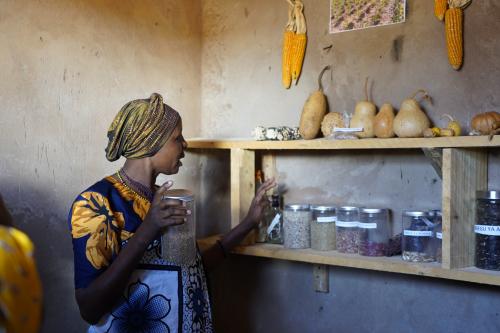
In Tanzania, popularising agroecological practices amongst smallholder farmers has gone hand in hand with bringing diverse stakeholders closer and working on policy issues. ActionAid Tanzania facilitated a series of consultations in country, intentionally including smallholder farmers, young people and women.
From these consultations, one proposal from farmers was to modify the seed policy to move away from genetically modified seeds and instead ensure access to organic seeds in the market – this was directly presented to the parliament by farmers themselves.
The Ministry acknowledged this contribution, and three other of the farmers’ recommendations, and is working on a National Organic Seed Bank for 2026. In addition, the farmers have played a role in influencing wording and policy in the East Africa Community space and, in parallel to their continued advocacy, are creating their own communal seed bank.
- Green Gen’: Youth-led climate action and environmental protection
'I used to think that fighting climate change is not my responsibility, nor did I have the confidence to think that my voice would be heard if I chose to speak up...we do not have to change society and the world at once. Step by step we can strive for a better and just future.’
- Leap Leesa, high school student in Siem Reap province
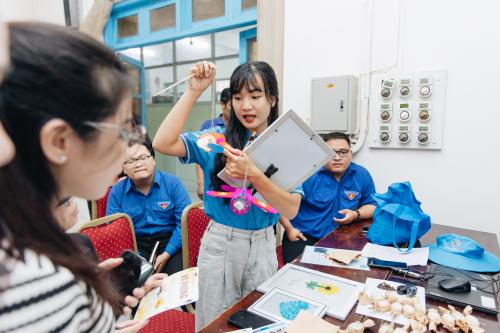
With the aim of mobilising youth in Southeast Asia around climate change and environmental protection, ActionAid Cambodia, ActionAid Vietnam and the National Rural Women Coalition (PKKK) Philippines have joined efforts.
A Green Generation Network was established, providing a space for youth to not only participate but create and lead initiatives. Actions include high school students and teachers creating their own digital environmental programme in the Philippines, engagement with schools, adding climate change to the curriculum in high schools across Cambodia; and the “Youth-led Initiative for Environmental Protection” competition in Vietnam where ten projects were funded and implemented.

- Pastoralist communities’ stride towards recognition
'Protecting pastoralist ways of life means protecting biodiversity, strengthening climate resilience and respecting those who have lived in balance with nature of centuries' - Sawaram Devasi, Pastorlist from Rebari community.
Pastoralist communities in India represent over 20 million people and contribute to climate resilience, biodiversity through pastoral grazing practices, food security, and livestock care. They face, however, high levels of marginalisation and vulnerability of social and economic rights.
ActionAid Association India worked with pastoralist communities, organising space with several states where pastoralists can share their issues and concerns. After several conversations amongst the communities, a joint agenda was created, ‘A Nomadic Pastoralists’ Agenda for Just Futures’, highlighting recommendations and reforms needed for livelihood of pastoralist communities.
Through advocacy, collective organisation and dialogue, pastoralists met with the Union Minister responsible for pastoralist issues in India, and for the first time, their demands were included in the ruling party’s political manifesto – a promising step towards national-level recognition.
- Champion farmers: agroecological amplifiers
‘Chimanga ni umoyo’ | Maize (corn) is life - Local saying, underscoring the importance of maize in Zambia
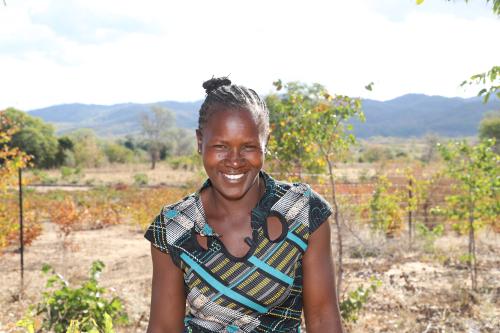
To combat effects of climate change in agriculture, particularly dry spells that increasingly affect the Western Province, ActionAid Zambia implemented six agroecological demos, or “centres of excellence” with thirty farmers. These farmers were selected as “champion farmers” because they were growing varieties of crops and had trusted relationships within their community.
In these demos, they applied agroecological practices such as planting of local, indigenous seeds, crop management, and natural disease control. The lead farmers then went on to train additional farmers in agroecology practices, creating a model of peer-to-peer learning and replication, reaching 180 farmers from Sesheke and Nalolo. As a result of the farmers’ activities, the government has allocated $37.7 million towards a sustainable agriculture finance facility.

What lessons have emerged?
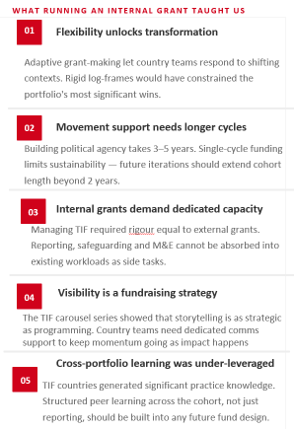
Organisations such as ActionAid can play a role to facilitate access to unrestricted funding to ensure programming at scale, which can then demonstrate impact. By creating space for country teams and partners to collaborate with feminist grassroots movements, and ensuring people’s voices are elevated in varied advocacy and policy spaces, power is shifted to people’s movements and their allies.
For more stories about ActionAid’s work see: Our work in action | ActionAid International